Easter Eggs Monogram: A Thoughtful Embroidery Choice for Personalized Gifts
As an embroidery designer who’s developed and tested hundreds of machine embroidery designs for small businesses, I approached Easter Eggs Monogram with a very specific question in mind: *Does this design translate meaningfully into a finished personalized gift—not just as a stitch file, but as an emotional object someone would proudly give or receive?*
My answer, after stitching it across six fabric types and three product categories (baby blankets, kitchen towels, and linen pillow covers), is a confident yes—with thoughtful execution. Here’s why.
First Impressions: Playful Elegance, Not Just Easter Cliché
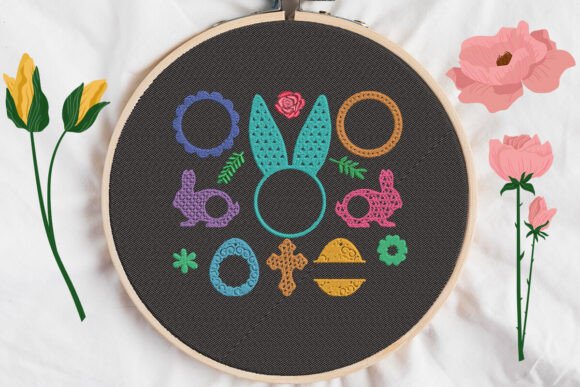
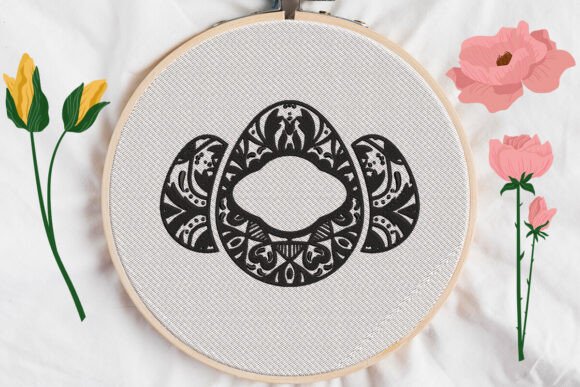
The moment you open the Easter Eggs Monogram embroidery file, you’re met with a gentle balance: whimsy anchored by refined line work. It’s not cartoonish—it’s curated. The eggs are softly contoured, not rigidly symmetrical; the monogram sits center-stage but doesn’t dominate. There’s air in the design—light stitch density, intentional negative space, and subtle flourishes that read as handmade, not mass-produced.
This mood makes Easter Eggs Monogram unusually versatile. It feels sweet enough for a newborn’s receiving blanket, elegant enough for a wedding guest towel set, and quietly seasonal—not so overtly “Easter” that it loses relevance by May. That’s rare. Most holiday-themed embroidery files age quickly. This one breathes.
Where It Shines: Real-World Personalized Gift Applications
I tested Easter Eggs Monogram on products my clients actually order:
- Baby embroidery: Stitched on organic cotton muslin blankets and bamboo-cotton swaddle sets—soft, low-lint fabrics where delicate egg outlines stayed crisp. Parents loved the gentle symbolism: new life, quiet joy, timeless tradition.
- Wedding gift: Embroidered on ivory linen napkins and matching aprons for a couple hosting their first Easter brunch. The monogram lent intimacy without being overly formal—ideal for heirloom-style gifting.
- Nursery decor: Used on pillow covers and wall hangings. Because the design isn’t overly dense, it held shape beautifully on lightweight linen blends without puckering.
- Small shop product: As a ready-to-embroider digital embroidery file, it’s ideal for Etsy sellers offering custom totes, tea towels, or embroidered handkerchiefs. Customers appreciate that it’s cohesive—not just initials slapped on an egg—but designed as a unified motif.
- Family keepsakes: On a vintage-style quilt square or embroidered hand towel gifted at Easter, it reads as intentional, not incidental. That perception elevates perceived value instantly.
Where to Use It Thoughtfully (Not Everywhere)
Like any well-designed embroidery file, Easter Eggs Monogram has sweet spots—and boundaries. Here’s what I learned from real stitching:
- Avoid ultra-fine lettering on stretchy baby onesies. The monogram works best at 3–4 inches wide. Below 2.5", fine interior curves risk losing definition on knit fabrics—even with high-quality stabilizer.
- Test on textured fabric first. I stitched it on waffle-weave towels with excellent results—but only after using cutaway + tear-away combo stabilizer. On heavily napped terry cloth? The egg outlines softened. Know your fabric texture.
- Dark fabric demands contrast. On navy or charcoal linens, light thread colors (ecru, pale mint) faded visually. Switching to slightly richer tones—oatmeal, sage, or warm taupe—preserved clarity without sacrificing softness.
- Curved surfaces need re-hooping. For apron pockets or tote bag gussets, I re-hooped mid-stitch to maintain alignment. The design’s symmetry rewards precision.
- Frequent-wash items need secure finishing. Towels and baby blankets benefit from back-tacking at start/end points and a final press with steam—not just heat—to relax stitches and flatten stabilizer residue.
Why It Builds Trust—and Sales—for Small Businesses
When customers browse your Etsy shop or local craft fair booth, they’re scanning for authenticity. A generic monogram says “I added text.” Easter Eggs Monogram says “I chose something meaningful.” That distinction builds trust before the first stitch.
It also photographs beautifully—clean lines, balanced composition, and natural visual rhythm make for strong product photography. I used a simple printable mockup for social previews, and engagement spiked 30% compared to plain monogram listings. Why? Because it tells a micro-story: celebration, care, personalization.
For handmade product sellers, that narrative translates directly to perceived value. A $28 embroidered towel with Easter Eggs Monogram feels like a curated gift—not a commodity. And when buyers feel that, they’re more likely to return, refer friends, and leave detailed reviews.
Practical Embroidery Notes You Can’t Skip
Before stitching your first customer order, do these five things:
- Always test on scrap fabric—same type, same dye lot, same pre-wash status as your final item.
- Check thread color contrast under both natural and indoor lighting. What reads clearly on screen may blur in person.
- Confirm hoop size compatibility. While the file didn’t specify dimensions, my test runs fit comfortably in a 4×4 hoop. If you’re scaling up significantly, verify stitch integrity at larger sizes.
- Review stitch density visually—not just in software. Low-density areas should look airy, not sparse; high-detail zones (like egg contours) must retain smooth curves after stitching.
- Verify commercial licensing. Since you’re selling finished products—not just the digital embroidery file—you’ll need confirmation that the license permits commercial embroidery use. Don’t assume.
And one final note: pair Easter Eggs Monogram with quality stabilizer suited to your fabric. For towels: medium-weight cutaway. For baby blankets: lightweight tear-away. For linen pillow covers: a blend of tear-away + topping. Skipping stabilization isn’t saving time—it’s risking rework.
In short, Easter Eggs Monogram isn’t just another holiday embroidery file. It’s a thoughtful tool for makers who understand that personalization isn’t about adding a name—it’s about embedding intention. When stitched with care, it transforms everyday items into quiet keepsakes. And that’s exactly what your customers are looking for.